Acompañan este blog:

Welcome!
I am writing this blog in Spanish and little bit in English too. Also you have Google Translate at the right side. THANKS :)

Mostrando entradas con la etiqueta Uruguay. Mostrar todas las entradas

miércoles, 19 de noviembre de 2014

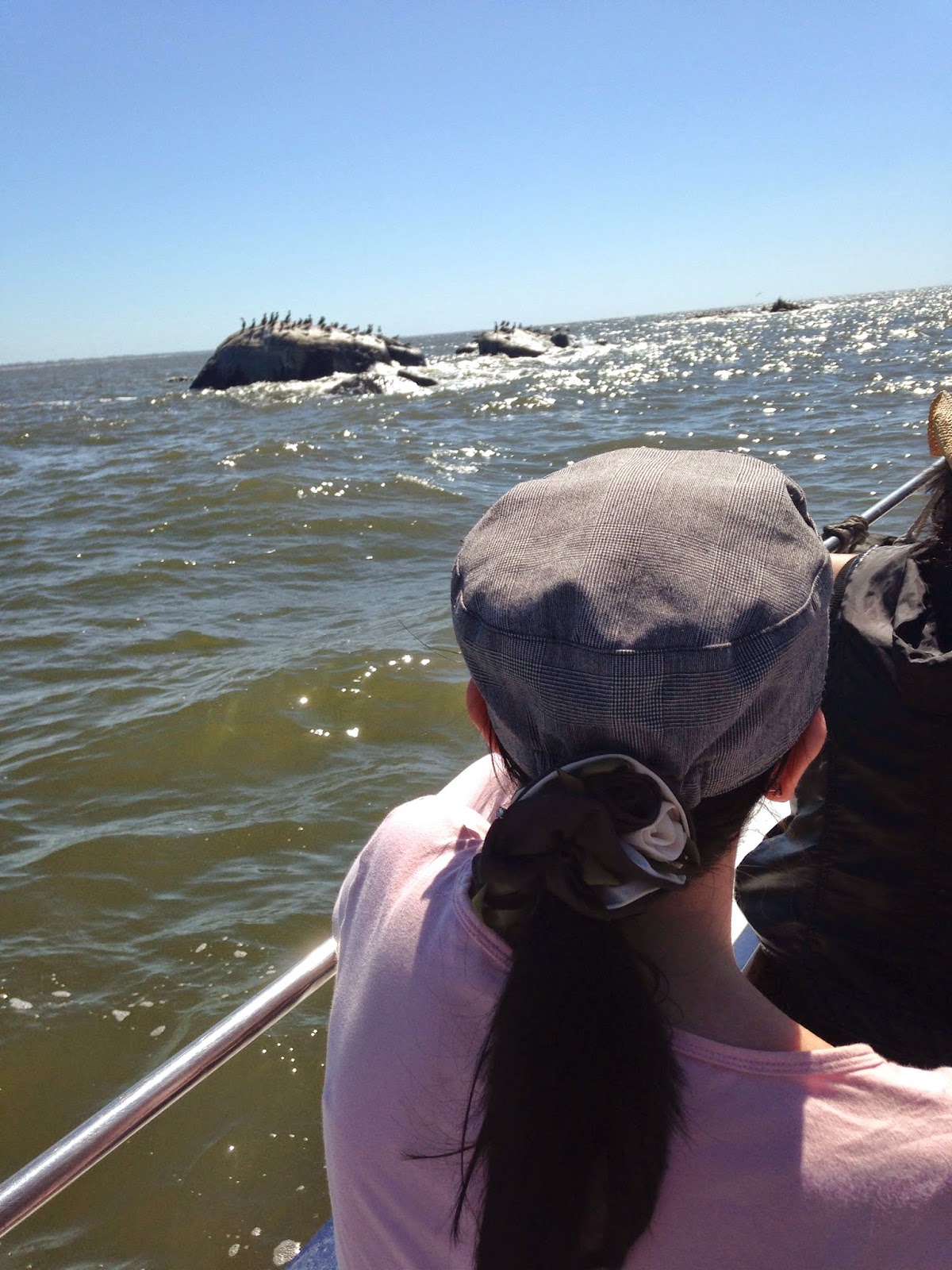
Lobos marinos en las costas de Montevideo// Sea Lions in Montevideo´s coast

Las costas del Uruguay se destacan por la presencia de estos animalitos que llegan a pesar 300 kilos :)
The coasts of Uruguay are characterized by the presence of these animals that can weigh 300 kilos :)

La costa de Montevideo no es la excepción así que un corto paseo en lancha permite llegar a su habitat, un pequeño islote cerca de la playa pero lejos de la vista desde la orilla (a unos 3 km).
The coastline of Montevideo is not an exception so a short boat ride allow us to reach their habitat, a small island near the beach but away from the view from the shore (about 3 km away)

                     Hotel Casino Carrasco.


sábado, 19 de julio de 2014

Conchillas

Please see English text at the end :)
Este pequeño pueblo uruguayo tiene un origen muy particular. Construido para albergar a los trabajadores de una factoría inglesa de fines del siglo XIX, mantiene aún hoy sus casas de estilo escocés agrupadas en bloques de hasta 120 metros de largo. Carecen de cimientos por estar asentadas sobre roca dura. Para darle fuerza y estabilidad, sus paredes se engrosan hacia la base, duplicando el ancho de su parte superior. Los postigos de las ventanas siguen el modelo del norte de Europa: se abren desde dentro de las viviendas, para permitir ver hacia afuera sin perder calor en el invierno.


Con una población de solamente 500 habitantes, Conchillas ha sabido conservar sus tradiciones, emplazado en un entorno natural hermoso, rodeado de monte indígena, sin ningún tipo de contaminación ambiental.
Con los ingleses, Conchillas fue un pueblo muy particular y próspero. Se dice que fue la primer localidad del interior del país en obtener la luz eléctrica, un sistema de salud avanzada para la época, educación gratuita, un tendido de vías férreas propio y una moneda local que valía para el resto del país.

El deterioro económico que sufre Inglaterra finalizada la Segunda Guerra Mundial hace que se retiren para siempre en 1953 dejando como testimonio de su paso por nuestra historia este pintoresco pueblo de 5 cuadras de longitud :)
This small Uruguayan town has a particular origin. Built to house the workers of an English factory in the late nineteenth century, still maintains its Scottish-style houses grouped in blocks of up to 120 meters long. They don´t have any foundation for being seated on hard rock. To give strength and stability, its walls are thickened at the base, doubling the width of the top. The shutters of the windows are copying the style of northern Europe: they open from inside, to allow to see outside without losing heat in the winter. 
With a population of only 500 inhabitants, Conchillas has preserved its traditions, located in a beautiful natural setting, surrounded by indigenous forest, without any environmental pollution.
With the British, Conchillas was a particular and prosperous village. They say it was the first town in the interior of the country to obtain electricity, an advanced health system for that time,  education/school for free, having their own laying railways and a local currency that was accepted in the rest of the country.
The economic problems suffered by England after the Second World War makes the British to go off forever in 1953, leaving as evidence of their passage through our history this picturesque town of 5 blocks long :)

jueves, 17 de julio de 2014

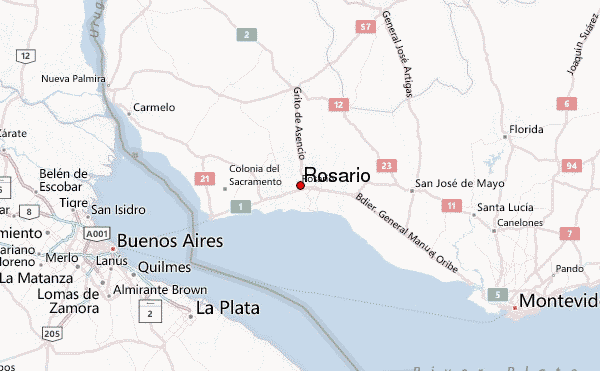
Rosario, Uruguay

 Rosario se ubica en el departamento de Colonia y es la única población fundada por españoles de la región. Esta singularidad se puede aún hoy apreciar ya que, los boliches, los restaurantes y bares por la noche son algo corriente contrariamente a los demás pueblos de la zona con fuertes raíces suizas donde la vida nocturna es prácticamente inexistente. Características culturales que los definen aún hoy.
Rosario is located in the department of Colonia and is the only town founded by the Spanish in the region. This uniqueness can still to be appreciate in a town where the clubs, restaurants and bars opened at night are common unlike other villages in the area with strong Swiss roots where the nightlife is virtually nonexistent.Cultural characteristics that define them even today.

Rosario nos da la bienvenida con sus casas de principios del siglo XX y sus murales que nos transportan a esos tiempos.
Rosario welcomes us with its houses of the early twentieth century and murals that transport us to those times.


En Rosario podemos encontrar pequeños detalles en las viviendas que se han perdido para siempre en el resto del Uruguay: hasta los años 80 era común llamar a la puerta de una vivienda golpeando con esta pequeña mano de bronce. ¡Resonaba por toda la casa!
In Rosario we can find small details in the houses that have been lost forever in the rest of Uruguay: until the 80s it was common to knock the frontdoor hitting it with this little bronze hand. Resounded all through the house!

En información turística te dan un mapa del pueblo con los edificios antiguos y los murales marcados con puntos, los cuales podemos ir descubriendo en un entretenido paseo.
In the office of tourist information they give you a map of the town with old buildings and murals marked with points, which we can discover in an entertaining walk.

Es fácil de llegar en bus público desde Montevideo y otras ciudades.
It is easy to reach it by public bus from Montevideo and other cities.

martes, 15 de julio de 2014

La Paz, Colonia, Uruguay

La Paz es un pequeño pueblo de tan sólo 603 habitantes ubicada a 5 km por camino vecinal desde Colonia Valdense (ver aquí) en el departamento de COLONIA, Uruguay.
La Paz is a small village of 603 inhabitants located only 5 km from Colonia Valdense (see here) in the department of Colonia, Uruguay. 
Inaugurado en 1852, fue centro de una colonia agrícola formada a partir del trabajo de inmigrantes europeos. Típico pueblito del Uruguay, muy tranquilo y silencioso, donde se respira historia a través de su gente y las casas antiguas que podemos apreciar en un recorrido a pie.
Founded in 1852, it was the center of an agricultural colony formed from the work of European immigrants. Typical village of Uruguay, very quiet and peaceful, where history breathes through its people and the old houses that we see on a walking tour.
La tranquilidad del pueblo y la belleza de estos edificios antiguos nos transporta a otros tiempos.
The tranquility of the people and the beauty of these old buildings transports us to another time.

Es un lugar para recorrer con calma, apreciando el entorno y el aroma a campo, donde el tiempo parece detenido.
It is a place to go quietly, appreciating the environment and the smell of field, where time stands still.
 Se puede llegar en auto o en bus público haciendo enlace en Colonia Valdense, desde Montevideo.
It can be reached by car or by public bus link in Colonia Valdense, from Montevideo.

lunes, 14 de julio de 2014

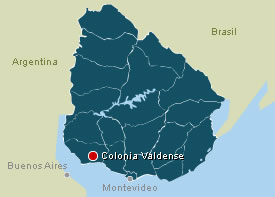
Colonia Valdense

Colonia Valdense es un pueblo con fuerte historia religiosa que se puede visitar en una tarde. Fundado en 1856 por un grupo de inmigrantes italianos del norte de Italia que buscaban mejores condiciones de vida lejos de las guerras que asolaban Europa, tiene algunos edificios de gran valor histórico como el Liceo Publico, inaugurado en 1888, siendo el primero en el interior del país que, pese a estar fundado por pastores, fue desde sus principios laico, una característica importante de la enseñanza en Uruguay y además mixto, con alumnos y alumnas estudiando juntos ¡algo excepcional en la época!

Colonia Valdense  is a town with a strong religious history that can be visited in an afternoon. Founded in 1856 by a group of Italian immigrants in northern Italy seeking a better life far from the wars that ravaged Europe, has some buildings of great historical value as the Public High-school, opened in 1888, the first made out of the Capital of the country. Even it was founded by pastors it was not a religious institute. Its secular principles is an important characteristic of education in Uruguay and it was mixed too, with male and female students studying together, something exceptional at that time!

miércoles, 19 de marzo de 2014

La Paloma (Uruguay)

La Paloma se encuentra a 240 km de la capital, Montevideo, y posee 20 km aproximados de costa. Fundada en 1874, La Paloma tiene distintas playas con diferentes características (con rocas, con olas, de aguas tranquilas, profundas, zonas de pesca) para todos los gustos :)
 La Paloma is located 240 km from the capital of Uruguay, Montevideo. It has 20 km of coastline approximate. Founded in 1874, La Paloma has different beaches with different characteristics each (with rocks, with waves, flat-water, deep, fishing zone) for everyone desires :)
El faro se puede visitar pagando un ticket muy económico. Desde la cima se pueden apreciar los hermosos paisajes de zona.
The lighthouse can be visited by paying a very affordable ticket. From the top you can see the beautiful scenery landscapes. 


Es un lugar tranquilo, ideal para pasar vacaciones con la familia.
 It is a quiet place, ideal for a holiday with the family.

miércoles, 12 de marzo de 2014

Fuerte de San Miguel (Uruguay) Fort of San Miguel

Este hermoso fuerte no es tan conocido como debería ser. Ubicado a tan solo 7 kms del Chuy (ciudad fronteriza, Uruguay- Brasil) por la ruta 19 hacia el oeste, fue construido en primer lugar por los españoles (1734) siendo finalizado por los portugueses  en 1737.
 This beautiful fort is not as well known as it should be. Located just 7 kms from Chuy (border town, Uruguay-Brazil)  Route 19 to the ,west was built first by the Spaniards (1734) and it was finished by the Portuguese in 1737.
Esta muy bien conservado y su entorno es realmente espectacular. En mi infancia me gustaba mucho visitar este lugar (a veces con la familia y otras veces también sola!) porque da la sensación de que el tiempo está detenido, rodeado de sierras y vegetación puramente uruguayas, poca gente, el sonido y aromas del campo uruguayo es un verdadero placer. Al visitarlo nuevamente en estos días puedo constatar que nada ha cambiado. El lugar sigue tan bonito y tranquilo como siempre.
 It is very well maintained and its setting is truly spectacular. In my childhood I liked visiting this place (sometimes with friends and sometimes alone too!) Because it gives the feeling that time is stopped, surrounded by mountains and purely Uruguayan vegetation, very less people, the sound and smells of the Uruguayan countryside is a real pleasure. When I visited it few days ago I could see that nothing has changed. The place is so nice and quiet as ever.


 Detrás de su puente levadizo nos encontramos con una valiosa colección histórica y se reproducen los ambientes donde vivieron sus ocupantes españoles y portugueses. Alrededor se halla un cementerio histórico, un parque y el museo donde se exhibe una diligencia de 1816, una carreta de 1880, infinidad de objetos indígenas, un típico rancho de barro y paja y la reproducción de una pulpería de la época entre otras cosas. 
 Behind a drawbridge we find a valuable historical collection and the environments where the Spanish and Portuguese occupants lived. Around it  we can visit a historic cemetery, a park and the museum where we can see a stagecoach from 1816, a cart from 1880, lot of indigenous objects, a typical ranch of mud and straw and pulpería (ancient grocery store) among other things exhibited.

Al estar tan cerca del Chuy es fácil llegar en bus (aunque la frecuencia no es mucha) Taxi (¡tomarlo del lado uruguayo!) moto o bicicleta. Abre sólo de tarde pero los alrededores se pueden visitar a cualquier hora.
Being so close to Chuy is easy to reach by bus (though they are not very often) Taxi (take it at the Uruguayan side!) Motorcycle or bicycle. Open only in the afternoon but the surroundings you can visit any time.


domingo, 9 de febrero de 2014

Lobo marino en Piriápolis//Sea lion in Piriapolis

Este lobo marino ha encontrado el pequeño muelle del puerto de Piriápolis (Uruguay) muy atractivo para una siesta.
 This sea lion have found the small breakwater of Piriapolis (Uruguay) very attractive for a nap.
Dice la gente del lugar que acostumbra aparecer trepando por la escalerilla como si de un espectáculo de circo se tratara :) Luego las poses convidan a las cámaras de fotos:
 Locals tell us that it usually appears climbing the ladder like a circus show :) Then it invites the cameras by the different poses:


Pero no es un animal entrenado ni nada parecido; simplemente es un lobo marino remolón que parece gustarle algo de popularidad :)
 But it is not a trained animal; just is a lazy sea lion that seems to like some popularity :)
Uruguay alberga las colonias de lobos marinos más grandes del mundo en algunos puntos de su costa, y su observación es un gran atractivo para el turismo. Se calcula que la población se incrementa anualmente con los nacimientos de 35.000 cachorros de lobo fino; y más de 1.000 de leones marinos.
 Uruguay hosts the largest colony of sea lions in the world in some parts of its coast, and their observation is a major attraction for tourism. It is estimated that the population is increasing annually with 35,000 births fur seal pups, and more than 1,000 sea lions.


LinkWithin

Related Posts Plugin for WordPress, Blogger...